Projects
*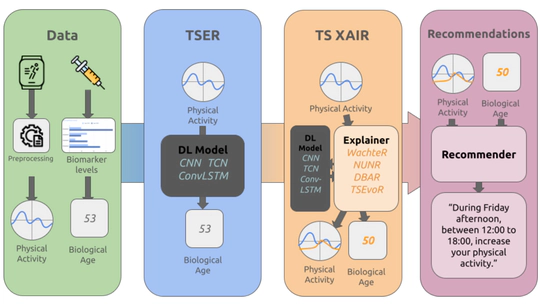




Explainable deep-learning time series extrinsic regression methods based on counterfactual approaches and evolutionary algorithms. The goal is to generate recommendations for improving general health using time-series models (TCNs) for biological age estimation.
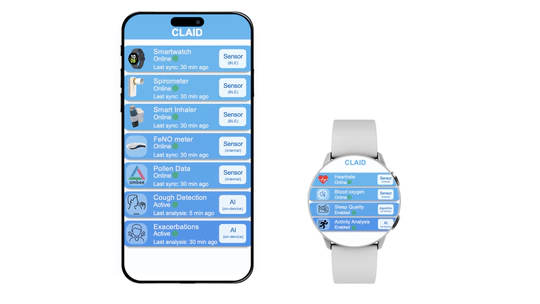
Development of a Health Asistant for asthma. Using 5 digital sensors and AI methods to passively assess symptoms and predict exacerbations in a 1-year-long study with 160 participants.
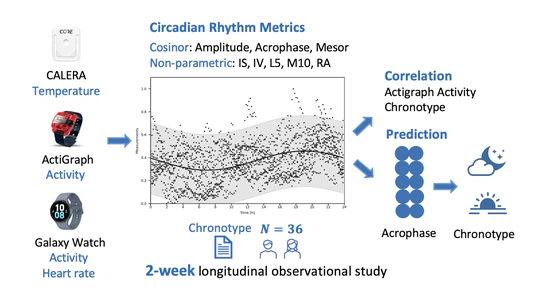
Longitudinal tracking of circadian rhythms of individuals using commercial devices in a 14-day study with 36 participants.
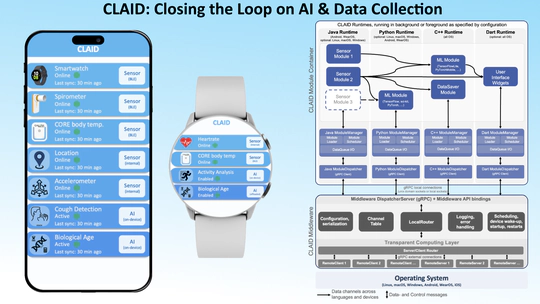
An open-source cross-platform, cross-language framework for machine-learning- and data collection applications across cloud, edge, mobile and wearable devices. Supports to run ML models directly in Python, even on Android and WearOS.
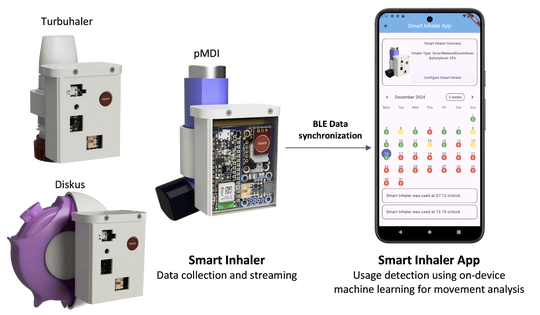
Development of a novel open source smart inhaler compatible with the three most common inhaler types (MDI, Turbuhaler and Diskus). Using passive sensors such as accelerometers to infer inhaler usage using machine learning.
Implementation of an outdoor Visual Scene Change Detection (VSCD) using deep learning computer vision models, outperforming state of the art approaches by pretraining on much larger indoor datasets (ChangeSim).
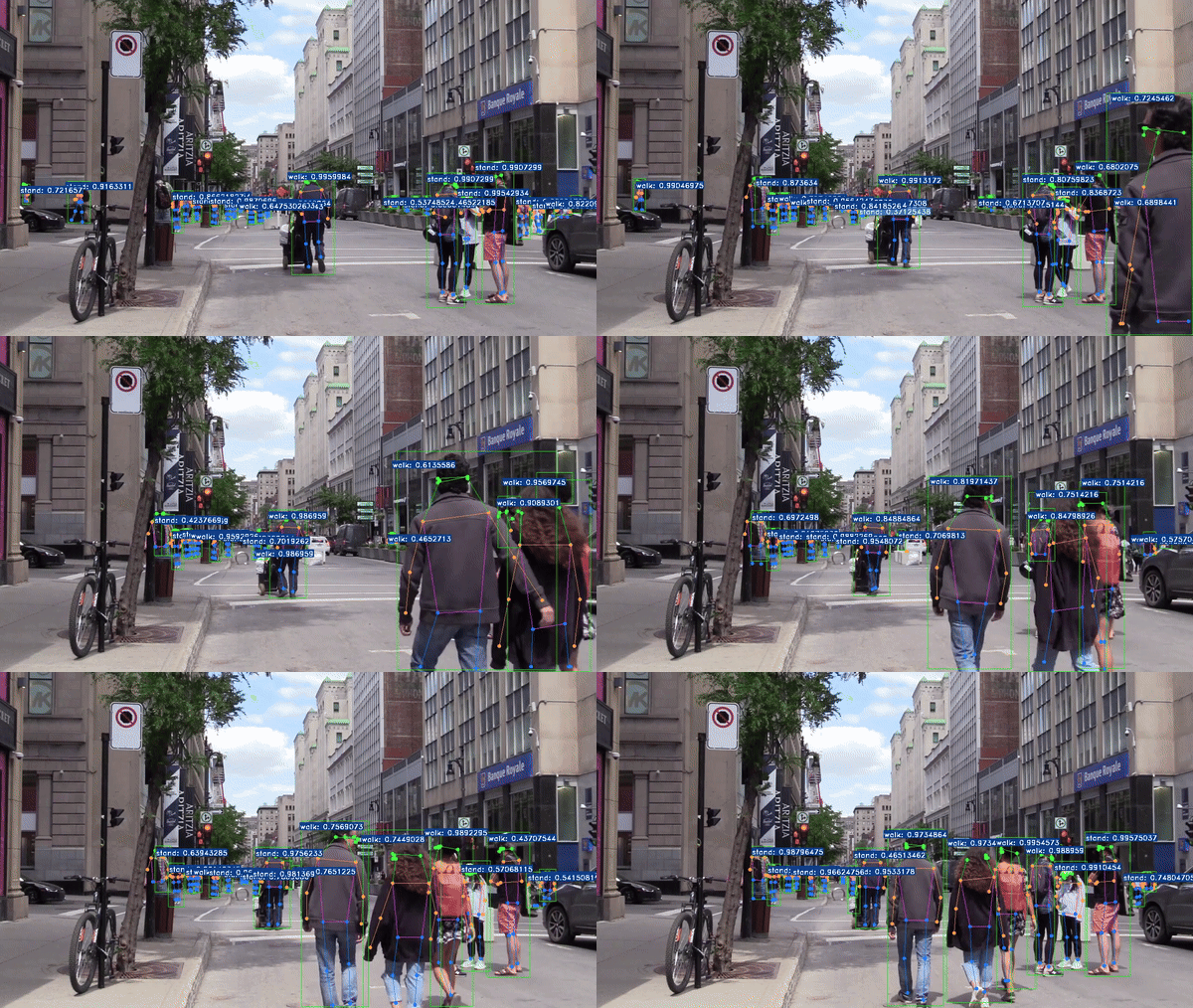
Implemention of realtime capable Human Activity Recognition (HAR) approach based on deep learning models SlowFast and PoseC3D. A major challenge was slow the inference speed of current state-of-the-art models. Several improvements have been made to achieve realtime inference (10+ FPS).
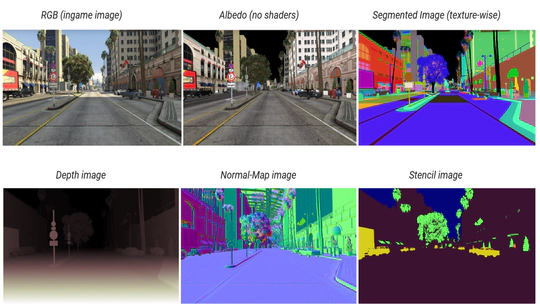
Modification of a popular video game to extract high-quality synthetic data for autonomous driving scenarios, such as road sign annotations, person pose estimation and object segmentation. Segmentations were extracted by hijacking the rendering pipelines of the game and extracting images at various stages of the rendering process.
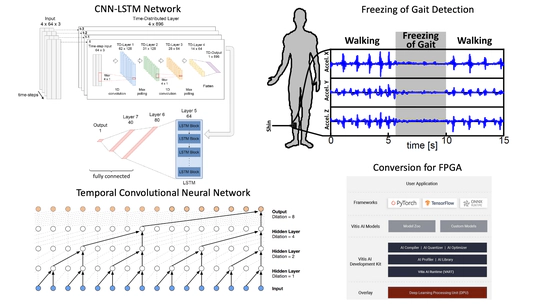
Trained and implemented Temporal Convolutional Neural Networks (TCNs) for detecting Freezing of Gait. Deployed the neural networks on FPGAs using VitisAI, adhering to strict realtime requirements.
Implemented a hardware accelerator for Convolutional Neural Networks for person detection on FPGAs using HLS. Implemented highly optimized pre- and postprocesing of images using SIMD on a microcontroller. Outperformed previous results by 5x (1040ms to 195ms per frame).
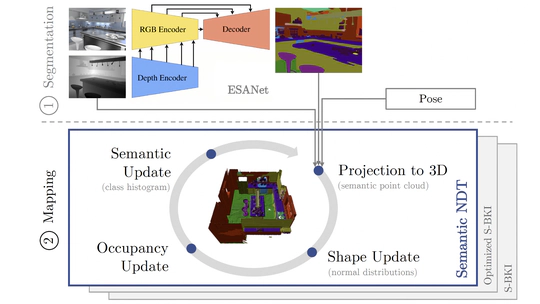
Implementation of a realtime-capable 3D semantic mapping framework based on Normal Distribution Transform (NDT) and semantic histogram maps. Mapping leverages hardware acceleration on embedded devices using TensorRT.
A realtime road sign recognition App for smartphones incorporating object detection and classification (SSDLite, MobileNet), optionally using hardware acceleration (CoreML, TensorFlow). Currently standing at 5000+ downloads.
Designed and built (PCB, soldering, programming) from the ground up a device capable to record and analyze biosignals via electromyografie using electrodes. Allows to play games and write texts. Presented at the Jugend forscht national finals 2016.